

What are the top growth imperatives of automotive led work lights in the year 2026
04-01-2026
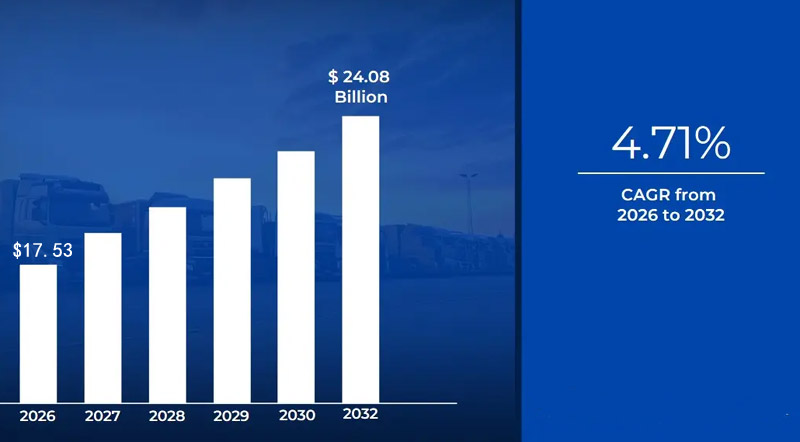 In the year 2026, the automotive LED work light market is developing into integrated "smart" systems from simple auxiliary illumination, which is driven by the rapid growth of the electric vehicle (EV) sector and industrial automation.
As the global transportation shifts toward battery electric vehicles (BEVs), energy consumption saving and environment protection is the most important concern for many countries. International buyers are focusing on actual efficiency. In 2026, premium led work lights are expected to exceed 300 lm/W, ensuring that mechanics and mobile vehicles can use high-power led work lights lighting without draining battery on the vehicle too much.
LED Work lights are no longer passive tools for auxiliary illumination. The growth imperative for 2026 is Bluetooth and Mesh-network integration. Specific-purpose led lights with integration of smart "IoT" Connectivity that now feature smartphone app controls to manage brightness, set timers for battery conservation, and link multiple units to illuminate an entire job site or garage bay.
Active thermal management and more passive thermal management solutions will be adopted to extend longer lifespan. Currently, more and more manufacturers are investing in advanced heat-dissipation materials, such as aviation-grade aluminum and double ball bearing fans. This aims to guarantee a 25,000+ hour lifespan even in hottest harsh environment or heavy-duty construction sites.
Adopting Matrix LED technology , instead of a simple flood or spot beam, some latest led work lights can now shape their beam patterns to avoid blinding oncoming traffic or colleagues, focusing light exactly where the work is being performed.
Flexibility is a another growth driver. Professionals prefer led work lights with dual-power capabilities—led lighting units that can run on a cordless tool battery that can be plugged into an AC wall outlet, or even utilize a USB-C power port for emergency charging.
Growth is surging in led work lights that offer CCT (Correlated Color Temperature) tuning for customization. This allows a mechanic to switch between "Cool White" and "Warm White" so as to reduce eye strain during long time tasks), or even high-CRI modes for high precision job and wiring identification.
As vehicles become more compact and complex, the demand for slim-profile "stick" led bar lights and "flex-neck" LED work lights is rising. These allow technicians to illuminate deep recesses in engine bays or under-chassis areas that traditional floodlights cannot reach.
High-end led work lights are beginning to use AI-integrated sensors to detect human presence or ambient light levels, automatically dimming when the user walks away or brightening as the sun sets, maximizing lighting efficiency and safety automatically.
©Copyright: 2008-2026 Guangzhou TEEHON Electronics Co., LTD. 