

NEWS
NEWS
Why does CNC aluminum housings need oxidation process for surface post processing
25-07-2026
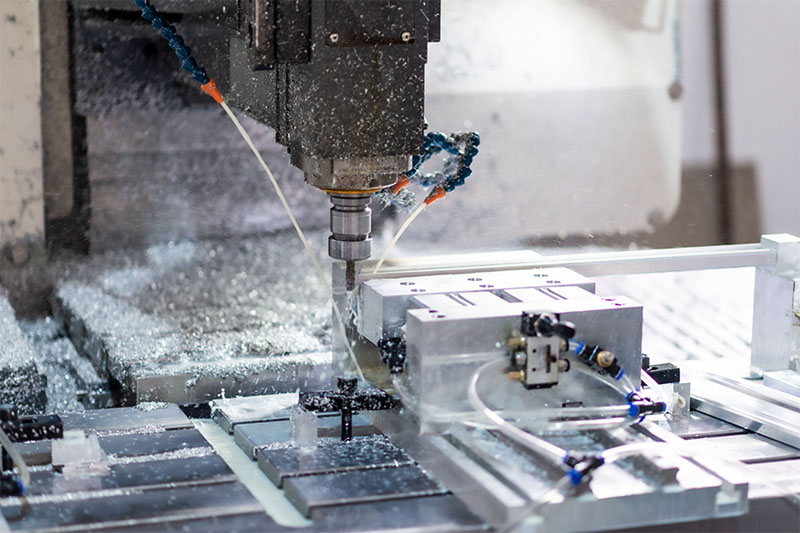
When people refer to "oxidation" for CNC aluminum housings, they are almost always talking about something like anodizing (anodic oxidation).
Cross-section of the protective anodized layer grown on aluminum. Source: Jonas Reuel / Getty Images
Without surface oxidation for post processing, raw CNC aluminum housings face several major performance problems such as corrosion, hardness resistance, poor heat dissipation, ugly surface and electrical insulation.
Raw aluminum housings reacts quickly with moisture, salt spray, UV rays, and outdoor chemicals, leading to pitting, oxidation spots, and structural degradation after some time. Anodizing converts the outer surface layer into aluminum oxide, which is chemically fatigued and much resistant to weather, salt water, and mild acids or alkalis.
Raw aluminum alloy ignots is relatively soft and easy to scratch or dent during assembly, handling, or operation. After the oxidation process, the CNC aluminum housing can provide solid scratch resistance.A dense layer is also made to reach hardness levels up to 60+ HRC (comparable to hardened tool steel), protecting the CNC housings from high vibration, gravel, friction, or impact.
For CNC housings that work doubly as heat sinks such as high-power LED light work lights housings or electronics enclosures, surface radiation differ between bare aluminum housing or oxidated CNC aluminum housing.
In contrast, bare aluminum has low thermal emissivity (~0.05 to 0.09), meaning it reflects radiation rather than shedding heat effectively into the environment.
The oxidated cnc housing boosts emissivity to roughly 0.85 to 0.90, helping the housing radiate heat far more quickly into the environment.
CNC machining process leaves tool marks, cutter lines, and slight color variations across raw aluminum billets. Oxidation forms a porous micro-structure prior to sealing, which allows manufacturers to absorb organic or inorganic dyes for rich, fade-resistant finishes.
It also help achieve uniform matte, satin, or bead-blasted surface textures that hide minor machining artifacts.In some way, CNC machined aluminum housing oxide is a natural dielectric process. Oxidized surface layers prevent short circuits if internal wiring or electronic components accidentally touch the housing wall.
©Copyright: 2008-2026 Guangzhou TEEHON Electronics Co., LTD. 